Minimum Viable Product (MVP) is such an essential phase of product development where success depends on balanced speed. You need to quickly collect feedback from your real users and validate your core idea. A basic MVP development project takes about 2 to 6 months, which can extend to 5-10 months for an enterprise-level MVP. If you’re building MVPs for the regulated industries, such as healthcare or fintech, you’ll need around 6-12 months, as they need to meet compliance requirements.
Delaying your MVP launch gives an opportunity to your competitors to dominate your market space. Also, building it too fast without a proper market assessment can waste your months of development effort. So the startup needs to go through a well-structured MVP process to ensure rapid development and user satisfaction.
What Is an MVP and Why Does Timeline Matters?
An MVP is mainly the simplest and earliest version of your product that is designed to validate the core feature for the users. The MVP is built with just enough features after assessing the market demand and the target audience’s core problems. Businesses focus on adding the functionalities that solve one specific problem really well instead of trying to do everything at once.
For a perfect MVP development, you require a good balance between time and speed. By launching quickly, you can meet your customer first before competitors and test your idea. But in case you’re going too fast without maintaining quality, it just frustrates users and can damage your reputation even before you get started. On the other hand, if you spend too much time perfecting every detail, then you may miss the market opportunity and face notably higher costs.
What Are the Phases of MVP Development and Their Timelines?
The MVP development goes through structured phases with specific time estimations.
1. Market Research and Idea Validation (1-2 Weeks)
This is the first step of deploying the MVP, where you need to research the target market and gather information about the audience. For this initial stage, developers usually take about 1 to 2 weeks.
During this time period, you mostly focus on the competitor analysis and market size assessment. Then you need to collect data on the problems that you are attempting to solve and validate them. If you’re working with a small team, the time may extend to 6 weeks or more.
2. MVP Scoping and Feature Prioritization (1-3 Weeks)
Right after idea validation, it’s time to transform these ideas into a concrete product roadmap. This phase usually lasts about 1-3 weeks, where you will define the scope and set the features by importance.
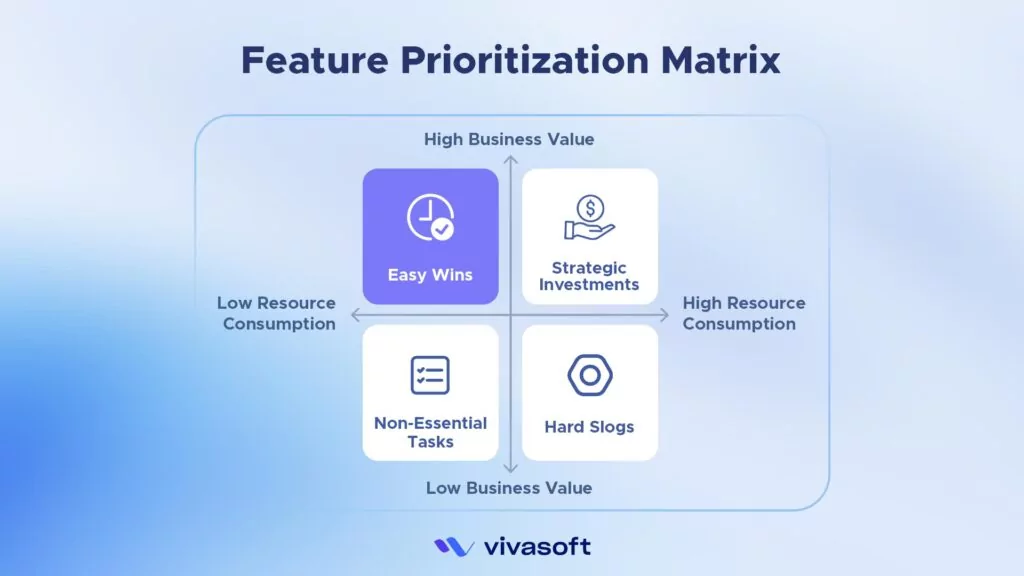
First, you’ll list all potential features and use cases over 3-5 days. Then you have to apply the MoSCoW or Kano methods and rank them by prioritization. Next, you’ll create detailed user personas and map their customer journeys in the next week. Lastly, finalize your actual features, and your team will then check technical stability for each feature.
3. Design and Prototyping (7-10 Days)
This is the step where you have to design the earliest version of the prototype and ensure all the essential features are validated in the market. It typically lasts 7 to 10 days.
Within this period, you will have to focus on developing the app’s UI and UX. You will develop wireframes and map user flow and layout. Then, you’ll develop high-fidelity mockups and visual designs, which typically take time.
Finally, you will transform them into interactive prototypes that simulate the product’s core features. After the completion, you may have to start conducting usability testing sessions for over 2-3 days.
4. Development and Iterations (4-8 Weeks)
After the successful prototype, this is the stage where you will head to the development phase of your product, which typically takes 4 to 8 weeks. The development team focuses on building both frontend and backend components. By utilizing the agile method, expert developers release small increments faster, testing them and fixing the bugs throughout each sprint cycle.
Within each sprint, they code essential features and run until testing. For convenience, set up repositories and CI/CD pipelines for automated testing. After integration, conduct the sprint reviews and validate the progress.
5. Testing and Quality Assurance (1-2 Weeks)
Following this, you have to focus on quality assurance to verify the MVP, which typically takes around 1 to 2 weeks. Some testing phases may take as little as 2-5 days if you are working with an experienced team and have dedicated QA teams.
However, this is the critical phase where you will have to go through a few testing options. Firstly, you have to check if core features work correctly through functional testing. Next, you’ll execute user acceptance testing with real users, which will take around the next 4-6 days.
Finally, conduct the performance testing and security audits. The QA team documents bugs and coordinates fixes with developers. However, small teams typically need 3-4 weeks to complete these thorough testing cycles.
6. Launch and Feedback Loop (Ongoing)
Preparing for the final deployment typically needs 10-14 days. The best you can start with is the controlled launch to a small group, 100 to 200 initial users who perfectly fit your primary persona profile. Thus, you can monitor the system and performance closely.
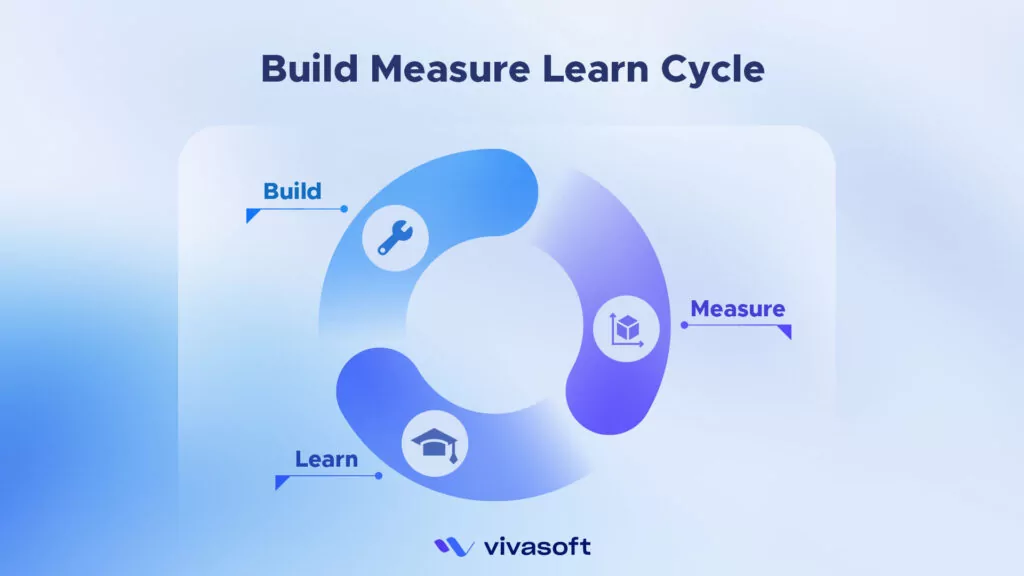
At the same time, collect detailed feedback on user experience and most preferred features. Identify any arising bugs through surveys and interviews. Analyze them and identify improvement opportunities. After launching the product, it’s an ongoing process.
How Long Does It Take In Different Scenarios?
The actual time for MVP development fluctuates based on the development team and the budget. For example, startups with a small budget typically need more time than funded MVPs building through expert teams and agile methods. In case you want enterprise-level MVPs, expect to wait up to 4-12 months to complete the project.
Startup With a Small Budget
If you have a small team, a limited budget, and are planning to make a basic MVP, it usually takes 4-6 months. Typically, your MVP will have fewer features and a simpler design. Your small in-house team will handle everything from the research, scoping, and development. Even the feature set stays lean with only the core problems being solved.
Funded Startup With External Agency
With sufficient funding and the partnership with a dedicated MVP development team, you can expect the timeline to shorten, which will take around 2-4 months. Instead of doing everything in-house, you basically outsource your tasks like design, development, and QA to an experienced agency. Expert MVP developers use agile methods to accelerate delivery.
Experienced specialists need less time for planning and prototyping. The best part here is that the QA team runs the testing phase at the same time, which saves weeks. All in all, with defined agreements and structured planning with a reliable MVP development company, you can save both time and resources.
Enterprise-Level MVPs
If you are planning to launch a large-scale MVP that needs to meet stricter standards and integrate with multiple existing systems, the timeline will typically stretch. It is often 4 to 12 months.
The management team spends extra time on this to understand the market and what the company really needs. Large companies have many departments and complicated systems, which often take a longer time in decision-making regarding design, budget, or resourcing. Even extensive checks and regulations extend timelines.
How Long Does It Take to Build an MVP in Different Industries?
Based on Vivasoft’s prior MVP development experience, it will take about 2–5 months to build a basic MVP. Whereas, an advanced MVP platform will take 6-10 months, depending on the specific industry needs.
| Industry/Category | Typical MVP Development Time |
|---|---|
| Consumer Apps | 2 to 4 months |
| E-commerce Platforms | 3 to 5 months |
| Healthcare and Pharma | 6 to 12 months |
| Financial Services (Fintech) | 6 to 10 months |
| Enterprise Software | 4 to 8 months |
| SaaS Products | 3 to 6 months |
| EdTech | 3 to 5 months |
Is It Possible to Build an MVP in One or Two Weeks?
Yes, you can build basic MVPs if you are developing simple software with minimal features. In this instance, you can develop simple landing pages or basic forms without advanced functions added. For this, you can use the no-code platforms and pre-built solutions.
Some of the tools, like Bubble, Webflow, or WordPress, can prove much more effective here. Even if you are developing a complex project, you can expect to accelerate the delivery by partnering with a high-performing team.
What Factors Influence MVP Development Time?
Several key factors directly impact your MVP development timeline and can either speed up or delay your launch date.
Scope and Number of Features
The available timelines mainly depend on the added features in it, which make it simple or complex. The more features you include, the longer you need to wait to complete the project. If you are developing complex MVPs with 15-20 features, the timelines often extend to 12-16 weeks due to advanced features.
Feature Complexity
Basic features in the product, like simple data entry or CRUD, are usually quick to implement and test. However, when developing an AI MVP, timelines often extend due to the added complexity of machine learning models. You will need to spend more time on algorithm development and training. Complex algorithms require additional time for data preparation and optimizing the code models.
Chosen Tech Stack and Integrations
The tech stack you are using for the MVP development might impact the timeline. Some popular frameworks like React, Angular, Vue.js, Django, and Flask need less time to work with. But if you are integrating the third-party APIs, it indeed adds about 1-2 weeks per service connection. The integration phase might go through key challenges like data silos, compatibility issues, and security risks, which also cause delays.
Team Size and Experience
You can expect to launch the project faster with an expert team that offers smooth cooperation and communication. But junior developers increase timelines compared to senior team members. Delays often also occur due to working with an inexperienced team, where you have to provide additional mentoring and code reviews multiple times.
Budget Constraints
Startups with a limited budget have to spend time managing resources that extend the timelines. Adequate funding will accelerate your project completion through dedicated full-time teams. They offer premium tools and services that reduce development time by 1-2 weeks.
Industry Regulations
Industry-specific MVPs also impact the overall timing. Typically, healthcare MVPs require additional time as you have to ensure compliance with regulations like HIPAA or GDPR. Financial services need extra weeks for security audits and regulatory approval.
What Common Mistakes Cause Delays in MVP Timelines?
The following critical mistakes can delay your complete efforts and stretch the time to your launch date back by weeks or months.
Scope Creep and Overbuilding
Without structured project planning, you will always face overtime and budgeting issues. Most companies still face critical delays due to adding “just one more feature” during development. It is also a red flag if the team is spending too much time on complex solutions when simple ones work better.
Poor Communication Between Teams
Delay occurs due to a lack of regular checks and shared documentation between the development and design teams. Team members go on assumptions about requirements instead of proper clarification. Also, stakeholders often give conflicting feedback that confuses your development team.
Neglecting Early Testing
You should verify your feature earlier in the prototyping. Some companies just skip user testing phases and wait until development completion to gather feedback. It causes major rework, and you have to deal with the unexpected bugs that cause delays.
Unrealistic Expectations
A critical mistake occurs when teams give in to unrealistic feature demands that delay MVP delivery. It is common that advanced features like AI models, real-time analytics, or blockchain integration need extra time. Yet stakeholders frequently underestimate these complexities and lead to costly delays.
How to Speed up MVP Development Without Losing Quality?
You can use the following strategic ways to speed the MVP development process.
Prioritize Only Must-Have Features
At the earlier stage, the best you can do is define the minimal feature set that solves the primary user problem. For this, you can utilize the MoSCoW method to categorize features into Must-have, Should-have, and cut out the non-essential backlog items. For example, in a ride-hailing MVP, you can focus on adding the release booking, location tracking first, and leave the referral systems or loyalty points for later iterations.
Use No-Code/Low-Code for Early Stage
For a quick prototype launch, you can use some popular platforms like Bubble, Webflow, or Airtable. They have ready templates that let you create working applications without writing complex code from scratch. You can also use Zapier to connect different services instead of building custom integrations.
Use Pre-Built Modules and APIs
It is a good suggestion that you can integrate existing solutions instead of building everything from the ground up. For example, use Stripe API for payment processing instead of developing your own system. Integrate Google Maps API for location features rather than building mapping functionality internally.
Adopt Agile and Continuous Feedback
You need to work in short sprints with regular user testing throughout development. Make sure to conduct weekly user interviews to validate features before full implementation. Release the basic features to beta users every two weeks and iterate based on their feedback.
Who Builds MVPs Faster: Development Companies, Freelancers, or In-House Teams?
If you want consistent MVP development management according to the user needs and market demand, a dedicated development company can assist you best. Reputed MVP development companies like Vivasoft Limited have specialized teams and established processes that help you accelerate the project delivery on time. For example, Klikit is a complex SaaS platform for restaurant management and multi-channel food ordering built by Vivasoft in just 5 months.
MVP development companies provide quality assurance, efficient project management, and ongoing technical support throughout development and beyond. With their established workflows, you can avoid costly delays. Freelancers are a go-to option here, but you have to deal with multiple people for different tasks. This can create coordination challenges. Even in-house teams often lack the knowledge and resources, thus you may have to face hiring challenges.
How Does Development Time Affect the Cost of an MVP?
The development time directly impacts the MVP costing. With the extended timeline, you can expect to spend more on resources or developer hours. In contrast, the shorter development cycles reduce costs, as you work on only the focused features and efficient workflows.
For better accuracy, you can estimate your MVP costs using an online MVP cost calculator. This calculator gives you a more accurate budget estimate based on the development time, team size, and feature complexity.