Transforming Legacy Infrastructure into a Modern, Revenue-Generating SaaS


Environmental Technology / GreenTech
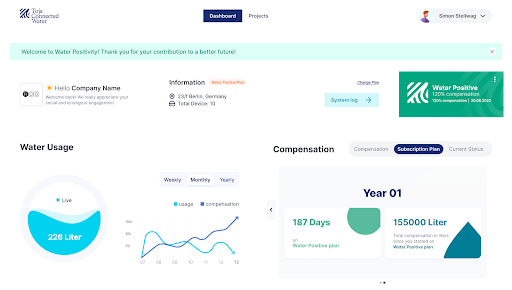
“Toja Connected Water” aims to make people aware about water usage. It is a German based project. An IOT device is connected with the water line. This IOT device triggers notifications about the usage of water every 3 minutes. When a user uses more water, he/she has to pay more compensation. To become water positive the users must have to compensate a minimum 120% of their actual bill. The compensated amount is donated in such a place where there is scarcity of water. There are various types of subscription policy to become water positive. The subscription plans are individual, basic, yearly plan, water positive. The user will get a 10% discount on tax after becoming water positive. Corporates are the prime customers of this project
Technologies Used
Python
Java Script
Fast Api
React JS
Next jS
PostgreSQL
Redis
Firebase
AWS
Git
CI/CD pipeline
S3 bucket
Challenges & Solutions
Challenges
- Over 100,000 real time data per day were being captured from the IOT devices in different locations. Keeping consistency, faster and processing those data organization wise was a challange.
- Storing survey data, measuring the compensation and categorizing organizations for certifications was a heavy task.
- Not every onboarding IOT was sending the same format of data. Filtering those defected data was a bit challenging there.
Solutions
- Real-Time Data Capture with the Snapshot Listener in the Python SDK: This is a best fitted way to record data in real-time for this project. This eliminates the requirement for continuous polling and keeps the application current.
- Utilized indexed queries and enhance data retrieval processes by focusing queries on particular timeframes or data types, minimizing excessive data transfers. Execute query batching to prevent overwhelming our system with a multitude of small queries.
- Before entering incoming data into the database, filter and preprocess it (e.g., perform transformations, eliminate irrelevant data fields, etc.).
- To increase access speeds, make sure data is stored in partitions according to time or place.
- Implemented a data validation layer to check for common defects in the data (e.g., missing values, out-of-range values, or corrupted data). This was done by applying validation rules:
- Range checks for numerical values filtered negative water consumption values.
- Type checks for data consistency.
Measurable Results
Increased efficiency
Cost savings
Growth metrics
Time saved
Team Involvement
| Resources | Count |
|---|---|
| Backend Developers | 3 |
| Frontend Developers | 3 |
| Full stack Developer | 2 |
| Project Manager | 7 |
| Ui/Ux | 1 |
| SQA | 1 |
| Other Specialist | Brought domain expertise (e.g., data analysis, content) to refine and optimize the final product. |
Core Features of the Software
Feature 1:
Feature 2:
Feature 3:
Feature 4:
Feature 5:
Feature 6:
Data-Driven Analytics Dashboard
Development Timeline
Initial Discovery and Planning
1 months
Design Phase
3 Weeks
Development
6 months+
Testing & QA
4 Weeks
Deployment & Post-launch Support:
6 months


Ready to transform your digital platform into a scalable, user-centric solution?