Sybil: A Secure & Compliance-Oriented Digital Platform for Respite Care Operations
Client
Industry
Healthcare
Region
USA
Overview
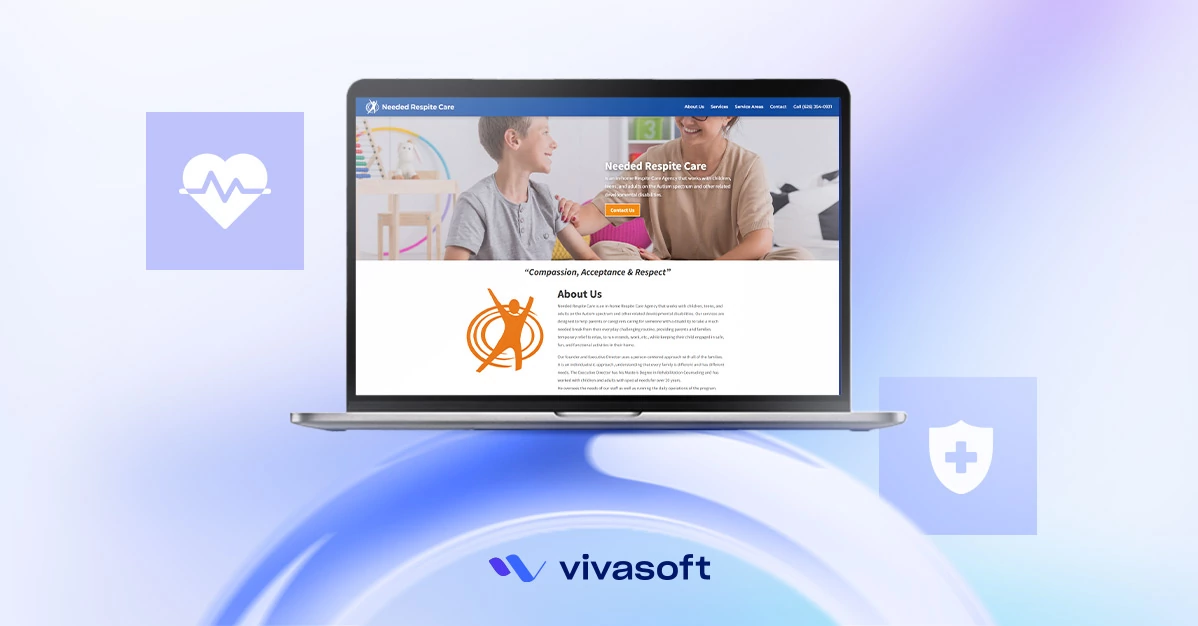
Needed Respite Care, an in-home respite care agency based in Pasadena, California, delivers services to children, adolescents, and adults with autism and other developmental disabilities. As the agency scaled, its operational workflows relied on manual processes and fragmented systems for timesheets, document handling, and reporting—introducing risks related to data consistency, access control, and governance of sensitive personal and health-related information.
Vivasoft developed Sybil, a secure, cloud-based operational platform designed with healthcare data protection principles in mind. The system centralizes timesheet management, document intake, reporting, and role-based access within a controlled environment. Sybil improves oversight of sensitive data, enforces structured workflows, and provides auditable operational visibility, supporting privacy-conscious operations aligned with HIPAA- and GDPR-informed practices.
Security & Compliance Considerations
Role-based access controls to ensure users only access data relevant to their responsibilities
Encrypted authentication and secure data transmission across workflows
Controlled document ingestion and standardized storage to reduce data exposure risks
Centralized data handling to support traceability, audit readiness, and governance
Cloud-native infrastructure aligned with healthcare data protection best practices
Technologies Used
C#
Java Script
Python
React
Dot Net
Tailwind CSS
Ant Design
Microsoft SQL Server
Microsoft Azure
Google Cloud Platform
Azure Pipelines
xUnit
Jira
Balsamiq
Challenges & Solutions
Challenges
1. Manual Handling of Sensitive Timesheet and Care Documentation
Manual document uploads and timesheet submissions increased the risk of inconsistent data handling, errors, and limited traceability.
2. Fragmented Systems with Limited Access Control
Operational data was spread across disconnected tools, making it difficult to enforce consistent access policies and maintain oversight.
3. Uncontrolled Document Intake and Storage
Unstructured document uploads lacked automated classification and governance.
4. Limited Operational Visibility and Audit Readiness
The agency lacked timely, structured insights into service utilization, approvals, and payroll alignment.
Compliance-Aligned Solutions
A structured, role-based digital workflow was implemented for timesheets and supporting documents. Azure Document Intelligence automatically classified and extracted data from PDFs, while standardized document generation with barcodes and digital signatures ensured consistency, traceability, and controlled data handling.
Sybil consolidated all workflows into a single, secure platform with clearly defined user roles. Each role accessed purpose-specific dashboards, enabling controlled visibility while supporting operational transparency
A serverless ingestion pipeline automatically captured uploaded documents, while a custom-trained Azure Document Intelligence model classified document types and extracted key fields. This ensured structured storage, consistent handling, and scalability without compromising data control.
Power BI dashboards were embedded into the platform, driven by structured datasets generated through automated ETL pipelines. This enabled near real-time visibility into operational KPIs, timesheet status, and payroll mapping—supporting audit readiness and informed oversight.
Measurable Results
45% Improvement in Operational Efficiency
Automation across timesheet approvals, document intake, and data reconciliation reduced administrative workload and shortened processing cycles.
60% Reduction in Manual Data Entry Time
Automated document classification, extraction, and ETL workflows replaced manual PDF and payment record processing.
70% Decrease in Errors in Timesheet and Document Handling
Client-side project managers ensured alignment with operational and compliance requirements
Core Features of the Software
Secure Authentication & Controlled Access
Encrypted login workflows and role-based permissions protect sensitive caregiver and client data.
Automated, Governed Document Processing
AI-driven classification and structured storage reduce manual handling of sensitive documents.
Digitized Timesheet & Approval Workflows
Secure submission, approval, and payroll mapping workflows improve traceability and consistency.
Centralized Reporting & Audit Visibility
Real-time dashboards provide transparent views into operational data and approvals.
Serverless, Secure ETL Pipelines
Automated data transformation supports integrity and consistency across systems.
Cloud-Native, Scalable Architecture
Designed for secure scaling as service volume and organizational needs grow.
Development Timeline
Discovery & Compliance Planning
2 weeks
1
UX/UI Design
3 weeks
2
MVP Development
3 months
3
Testing and Quality Assurance
Conducted after each sprint
4
Future Roadmap
Planned enhancements include advanced caregiver scheduling, automated invoice generation, deeper payroll integrations, and expanded machine-learning models for document accuracy and exception handling. Additional workflows—such as incident reporting and digital client onboarding—are being evaluated to further strengthen governance and operational efficiency.
Future phases may include multilingual interfaces, mobile applications, multi-agency support, and enhanced analytics for compliance monitoring and operational forecasting.
500+ companies rely on
our top 1% talent to scale
their dev teams.
Start Your Custom Software Journey Today
Turn your ideas into reality with software that fits your unique needs. We're here to partner with you every step of the way!

 Industry
  Region