
In the billion-dollar software development industry, it’s important to know the key differences between staff augmentation vs outsourcing. Your in-house team cannot manage all aspects of work. Sometimes, you need to look for extra talent to fill in certain cracks in your system. To have a competitive advantage over other software companies, it’s important to make the correct decisions for yourself.
Sometimes you will need to hand over a project to a third-party vendor, and they will assume responsibility for the completion of said project. Other times, you will need to hire experts to come and work with your in-house team for project completion. The aforementioned occurrences are staff augmentation and outsourcing.
Comparing Staff Augmentation and Outsourcing

There are pros and cons of both strategies. Before we delve into augmentation vs software outsourcing, we need to fully understand the differences between the two. Note that there is no one correct answer for either strategy.
What is the best outcome for you? This will depend on what your company specifically needs. Factors such as the nature of your project, your timeline, and your budget will determine which route is better suited for you.
For your consideration staff augmentation is used to leverage existing capabilities. Outsourcing often is used when there are certain incapabilities that the in-house team cannot meet. There are many more such differences between augmentation vs outsourcing which we’ve highlighted below.
| Factors | Staff Augmentation | Project Outsourcing |
Capabilities | Leverages capabilities that already exist for better and faster project completion by bringing in a team of experts | Overcomes internal incapability by giving responsibility for the project to an external team of experts |
Resources | Resources managed by the company. The company is responsible and accountable for the project. | Resources managed by vendor. The vendor is responsible and accountable for the project. |
Team Dynamics | The team consists of the company’s employees and an external team of experts | The team only includes an external team of experts managed by the vendor. |
Cost of Services | The cost of services is tied to the number of hours worked and the general timeline of the project | The cost of services is tied to the outcome of the project that’s being outsourced |
Long-Term vs Short-Term | An increase in agility means it’s more effective with shorter timelines | Especially cost-effective for large, long-term projects |
Pros and Cons of Staff Augmentation

Now that we’ve covered the basic difference between staffing vs contracting, let’s delve a little deeper into the pros and cons of each strategy.
Pros of Staff Augmentation
Unlimited Talent for Hire
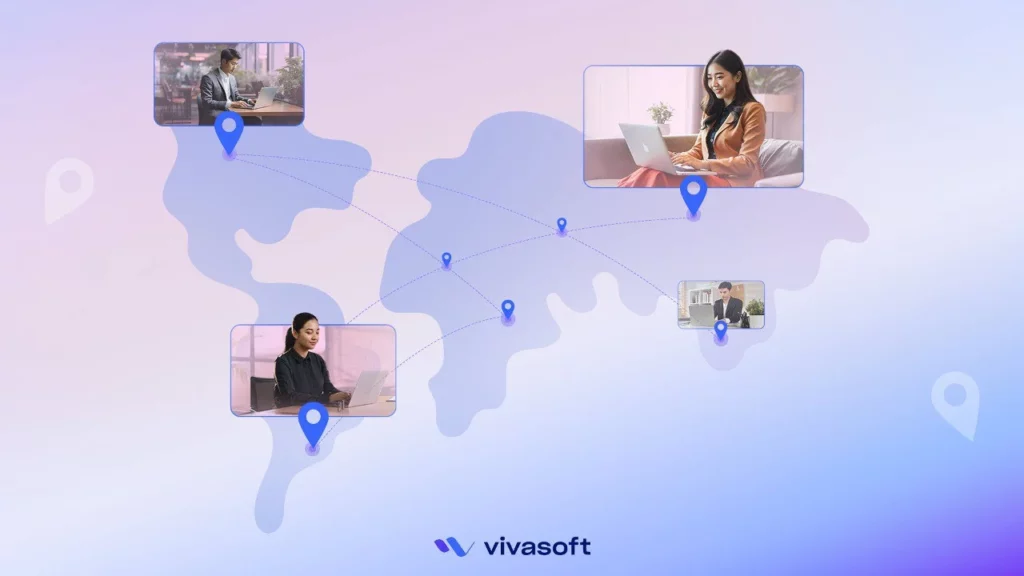
One of the biggest advantages of staff augmentation is that you are not geographically bound when it comes to hiring talent. Staff augmentation is a global method. This means you have experts from all around the world at your disposal.
This is incredibly helpful for companies. Usually, you can’t consult experts from such a diverse pool. With staff augmentation, you can hire experts in your team from anywhere in the world. This is an incredible competitive advantage for any IT company.
Greater Scalability
Scalability is extremely important for companies. When a company can maintain its productivity, costs, and output despite an increase in workload, that’s usually a big indicator of the company’s success. That’s why all companies strive towards achieving scalable strategies.
Staff augmentation is an incredibly scalable solution. You can easily scale your team according to your subjective requirements.
Extremely Cost-Effective
Here’s a hard truth: usual hiring processes are tedious and cumbersome. On the contrary, staff augmentation is a much better method. When you apply conventional hiring methods to your company, you will inadvertently sign up for a long hiring process. Think about the alternative. When you are augmenting your team, you are simply hiring the experts for the period that you need them.
Why is this a better alternative? It’s less long and tedious. Additionally, you don’t need extra training and onboarding programs in place. The experts are already well-trained in their respective fields. So you don’t need to pay out-of-pocket for any additional training. This significantly reduces the cost of hiring.
Greater Control Over Project
A significant advantage that’s owned by staff augmentation vs outsourcing is the fact that you get greater control over the project. When you are opting for staff augmentation, you are simply adding experts to your in-house team. You still call the shots. The project is still yours. You can control the timeline, the budget, and the way it will be completed.
When it comes to outsourcing, you lose that control to the outside vendor who will take charge of your project. It’s important to have a trusting relationship with your vendor for sure, however, the greater sense of control is still a huge pro of staff augmentation.
Highly Flexible Approach
This approach is extremely flexible. The number of people you can get on board will depend on how many people you need. The nature of the work will also be determined by you. You have complete control over everything. The project will be completed exactly according to how you want it. You will hire the number of people you need, for the duration that you will need them. This is why staff augmentation is such a highly coveted strategy.
Cons of Staff Augmentation
Now that we’ve gone through some of the pros of staff augmentation, let’s discuss the cons. Remember that no strategy is foolproof. There are pitfalls to everything. However, if you’re considering staff augmentation, remember that there are many pros to it as well.
Increase in Work Pressure
It’s important to remember for your consideration staff augmentation is a supplementary strategy. This means it adds to your team. It doesn’t take full control of your team. This would inadvertently mean more workload for your team leaders. Your managers will have to supervise more people. They will have to take in more pressure.
If there is a lack of personnel in your company or a lack of people in leadership positions, this may be a difficult position to be in. Usually, companies can make do with this regardless. However, it’s an important consideration to make if you’re considering this strategy for your company.
Differences in Time-Zones
While having access to unlimited expertise can be a blessing, it also has drawbacks. Working with a globally augmented team will mean time zones. If you are working with people in different countries, you will have to be cognizant of the fact that you’ll have to work in difficult time zones. This is a sacrifice most companies have to make when they have international staff.
Language and Cultural Barriers
Similar to the last consideration about time zones, it’s important to take note of differences in language and culture.
Advantages and Disadvantages of Outsourcing

Similarly to our last section, we’re going to dissect some pros and cons of outsourcing.
Advantages of Outsourcing
Reduced Workload
The best thing about project outsourcing is that you can relax a little bit! There is less project management required since the work is completely outsourced. Hence, the vendor handles all of the project management aspects. You can just focus on the result of the project, and not have to worry about everything else!
Access to International Professionals
There are certain countries where the tech industry is positively booming. Being able to outsource your work internationally to companies based in those countries is a huge advantage. This is a huge bonus if you’re outsourcing your project. You can get first-hand access to global experts. Not only that, you can completely depend on those experts to bring your vision to fruition.
Less Training Required
Although there are key differences between augmentation vs outsourcing, they have one thing in common: they eliminate the hurdles of the traditional hiring process. When you outsource your project to experts, you won’t need to go through the trouble of training them. Hence, unless you have specific legal obligations, you won’t need to go through any tedious training when outsourcing a project.
Disadvantages of Outsourcing
Lack of Control
One of the common problems cited with outsourcing is the lack of control. Since the third-party vendor assumes all responsibility for the project, you have to give up control over it. This is an important point to consider. This is why communication is really important with your vendors and contractors.
If you have adequate trust in your vendor, this shouldn’t be a problem. Even then, you must establish clear communication. Deadlines, expectations, and other aspects of the projects should be communicated clearly before handing the project over to the vendors.
More Expensive
Staff augmentation only requires you to pay the contractors for the specified duration you hired them for. Outsourcing, on the other hand, requires you to pay depending on the completion of the project. In many instances, project outsourcing costs more.
Since the outsourcing company bears the risks of the projects, they often charge up to 30% more. In staff augmentation, you usually pay an hourly or a monthly rate depending on the company’s policies.
Outsourcing companies also often don’t take up smaller projects. Since smaller projects are not deemed cost-effective for them. Hence, if they are taking up a smaller project they often charge a premium rate for it. This makes them more expensive than their augmentation counterparts.
More Expensive
Staff augmentation only requires you to pay the contractors for the specified duration you hired them for. Outsourcing, on the other hand, requires you to pay depending on the completion of the project. In many instances, project outsourcing costs more.
Since the outsourcing company bears the risks of the projects, they often charge up to 30% more. In staff augmentation, you usually pay an hourly or a monthly rate depending on the company’s policies.
Outsourcing companies also often don’t take up smaller projects. Since smaller projects are not deemed cost-effective for them. Hence, if they are taking up a smaller project they often charge a premium rate for it. This makes them more expensive than their augmentation counterparts.
Difficult to Integrate
With staff augmentation vs software outsourcing, a key difference is antegration. In augmentation, you are integrating experts into your existing in-house team. However, when it comes to outsourcing, you are giving your project to an external team of experts.
This may make the moving parts of your project difficult. You will have a lack of control over one part of your project while having complete control over other parts of your project. This dissonance of control and difficulty in integrating is a disadvantage of this strategy.
Types of Staff Augmentation

Project-Based
Sometimes you will need to hire professionals for your team for a specific project, end goal, or task. That’s when you’ll need to use project-based staff augmentation. Here, you only hire the experts for your in-house team for the specific project that needs to be completed. This is often short-term, and very goal-oriented.
Skill-Based
Staff augmentation and outsourcing are both ways of making up for some lack of skills in your in-house teams. Sometimes, you aren’t focused on one specific project, but your overall team requires a specific skill. This is quite common in the IT world. That’s when you would opt for skill-based staff augmentation. This is when, instead of looking to complete a goal, you look for experts with the skills that your in-house team lacks.
Time-Based
Often companies prefer augmented teams for a specific period. This may be to fill in temporary gaps; maybe some of your workers are on leave, or your company is growing currently and some roles are yet to be filled. In those cases, you may need to have experts temporarily.
Hybrid
If you combine two or more of the aforementioned approaches to staff augmentation, you’ll be opting for hybrid staff augmentation.
Onshore
In this type of model, you hire experts from the same country as you to work with you on your project. This eliminates many of the time zone and cultural barrier-related cons of staff augmentation.
Nearshore
In this specific augmentation model, you opt to hire experts from a nearby country within your region.
Offshore
This is the most international form of augmentation there is. In offshore staff augmentation, you can hire from whichever country you wish. This approach brings forth the issues of time differences and cultural and language barriers.
Dedicated Team
In this type of team augmentation, you hire a dedicated IT team long-term and they work in conjunction with your in-house team.
Types of Project Outsourcing

Offshore Outsourcing
Although there are many differences in staff augmentation vs outsourcing, the basic concepts are the same. In this approach, you outsource your project to a completely different region.
Onshore Outsourcing
If you’ve opted for onshore outsourcing, this means you’ve given your project to a company that resides in the same country as you.
Nearshore Outsourcing
In nearshore outsourcing, the company you’ve outsourced your project to is close to you in proximity, but not within your geographical borders.
Multi-Source Outsourcing
If you’ve outsourced projects to multiple IT vendors at a time, you’ve opted for the multi-source outsourcing approach
Staff Augmentation vs Outsourcing: Which is Right for Me?
Whether you opt into augmentation vs software outsourcing will completely depend on what you envision for the project. We cannot make that call for you. That is something you will have to decide for yourself.
There is a world of difference between staffing vs contracting. You will need to look at the type of your project. Is it a long-term project? In which case you may want to opt for outsourcing. If it’s a shorter-term project with a stricter timeline, an agile approach is probably the best idea.
This also depends on how much control you’re willing to relinquish. Maybe your team doesn’t have the proper expertise to work on the project. That’s when outsourcing is a better idea. You can simply give control of the entire project to an external vendor. This is useful when there are certain inadequacies or lack of expertise within the team that are not possible to fill in short notice.
However, if your team has some expertise already and you’re looking to leverage that expertise with more people, then staff augmentation is the correct option for you.
The nature of your project, the cost of your project, and the goals of your company are all factors that will help you decide which is the correct call for you. There is no right and wrong answer when it comes to deciding between staff augmentation vs outsourcing.
How Do I Find the Right Contractor?
To succeed in your project, finding the right contractor is the key. You will have to establish a relationship of trust with your contractor. You will have to have synergy, a proper understanding of each other’s dynamics, and complete trust in one another.
The first thing you need to do is make sure your contractor has years of experience. Newer contractors usually don’t have the industry reach or the expertise to have the amount of talent that you will need. To build proper connections, a contractor needs experience. Hence, you should look at a company with years of experience.
Secondly, they must have the proper levels of expertise, especially in the niche you are looking for. A good way to go about this is to do deep levels of research by looking at their websites. Most companies have their expertise cited on their websites, along with reviews of past clients. It’s also useful to look into the types of projects they’ve completed, and whether that matches with yours.
Vivasoft Limited: The Best Choice for Staff Augmentation
Now that we’ve covered the details of staff augmentation vs outsourcing, you must be looking for recommendations. You must have a trusted partner with you for augmentation. Otherwise, there are dangerous pitfalls for your company!
There are several reasons why Vivasoft Limited is the best place for staff augmentation. With over 70+ successful projects completed and almost 200+ reliable software engineers, we’ve had more than 7 years of experience under our belt. If you’re looking for agile world-class teams deployed at your service, look no further than us.
Staff Augmentation is one of our key services, along with project development, MVP services, and offshore development. We follow agile methods to reach previously established deadlines.
Our Team Augmentation Process
Our process is extremely flexible and approachable.
- You share your talent requirements and team size with us
- The contract signing for IT staff augmentation takes place
- The talent is allocated as ready-to-go teams exactly as you required
- The project will continue with the augmented team. Our team will mesh smoothly with your existing in-house team to deliver the best possible results for your project.
How Can We Help You?
Our teams of experts will help you accomplish all your business requirements. With a personalized and flexible team augmentation service, you won’t need anything else to generate significant business results.
We can provide hardworking and talented individuals on demand as per your requirements. Additionally, our team of IT experts uses new and innovative technology, to generate significant results for any project. Not to mention, this strategy is easily scalable and completely transparent and we take extreme caution to maintain all security measures.
Conclusion
Finding the right way to make your vision come to fruition is the most important thing for a company. This is why different companies employ different strategies. Some of the most crucial decisions you will need to take will involve choosing a specific strategy for the future of your company.
This is why understanding staff augmentation vs outsourcing and understanding the difference between staffing vs contracting is crucial for companies. There is no one correct path when it comes to choosing between the two.
The kind of projects you are going for, the length, duration, scale, and budget will determine which route is the correct one for you. We hope our definitive guide of staff augmentation vs outsourcing helped you in your quest to find the right fit for yourself. If you are looking for a trusted partner to work with, look no further than Vivasoft.